Every emergency situation has a tempo. The initial min is confusion, the second is decision, and by the third, momentum embed in for much better or worse. A capable chief fire warden establishes that energy in the ideal instructions. Training issues, but so does the state of mind to take fee when alarms, smoke, and human unpredictability assemble. If you are entering a chief warden duty or forming an emergency situation control organisation for your site, a well-structured chief fire warden course turns concept into collaborated action.

This overview distills what I have actually seen work across offices, healthcare, plants, education, and retail. It clarifies how PUAERF005 and PUAERF006 expertises integrate with practical fire warden training, what to expect from a chief warden course, and the judgment calls that separate box-ticking from real readiness.
Wearing the hat: importance, colours, and the chain of command
Visual identifiers issue under tension. People seek indicators of authority they can trust in seconds, not minutes. In lots of Australian offices, safety helmet or hat colours adhere to a broad convention that helps the emergency situation control organisation function under pressure:
- White is commonly used for the chief warden or chief emergency warden, in some cases noted with "Chief Warden." Yellow or red commonly determine floor or area wardens. Other colours can show communications or first aid functions, relying on the website's emergency situation plan.
When asked what colour helmet does a chief warden wear, white is the basic solution in many structures. Still, verify the scheme in your emergency strategy, since some sites take on neighborhood variants. I have actually seen huge centers make use of white for chief, yellow for wardens, and orange for communications. The point is consistency. Staff needs to be pierced to try to find the chief warden hat colour quickly when emptyings start. That simple acknowledgment speeds coordination and decreases discussing each other.
The foundation: PUAERF005 and PUAERF006 in context
A solid chief fire warden course draws from two core devices:
- PUAERF005 operate as component of an emergency control organisation PUAERF006 lead an emergency situation control organisation
Those codes, often composed informally as puafer005 and puafer006, anchor the skills. The PUAERF005 course concentrates on being a skilled member of the team. You learn to move locations, take care of discharge paths, assist mobility-impaired occupants, and maintain interaction with the incident controller. The PUAERF006 course improves that foundation, preparing you to make time-critical choices, designate sources, regulate info circulation, and communicate with exterior emergency services.
Neither system transforms you right into a firemen. The focus is safe, organized occupant motion and incident coordination up until emergency situation solutions presume control. That difference issues. Chief fire warden training is about management, communication, and systems believing under unpredictability, not tube handling or smoke diving.
What a chief fire warden actually does
Titles can appear ritualistic until the alarm system goes off. Chief warden responsibilities crystallise quick in a genuine occasion. Right here is what the role normally entails in method:
The chief warden is the occurrence controller until emergency situation solutions get here. You decide whether to evacuate, move, sanctuary in position, or hold. Those decisions depend on alarm system information, constructing fire sign panel information, CCTV (if available), wardens' records over radio, and what you can observe without taking inappropriate personal risk.
You established the interaction rhythm. During an alarm, babble multiplies and clarity discolors. The primary sets radio discipline, assigns networks if required, and makes use of short, unambiguous expressions. Your voice needs to cut through the sound, not contribute to it.
You manage wardens. Fire warden training prepares wardens to move, check doors for warmth, close doors behind them, and record clear or otherwise clear. The chief appoints jobs, receives acknowledgements, and records area status. Good chiefs ask for structured reports: state area, condition, activity, and requires. "Degree 3 eastern wing, smoke in passage, transferring to west stairwell, demand help for one mobility device individual."
You preserve the web link to the outside. On larger sites, an interactions warden handles the phone, however the chief warden stays responsible for the message: what the case is, where, the amount of owners, unique risks, and whether anyone is unaccounted for. That information dictates how fire teams present their arrival.
You call the all clear. Just when the structure's systems, aesthetic checks, and emergency services comments confirm safety do you authorise re-entry. Shortcuts here lead to second discharges and loss of trust.
The training arc: from understanding to command
A thorough chief fire warden course usually spans these styles:
Understanding fire and structure systems. You learn just how the fire indicator panel offers mistakes and alarms, how detectors and call factors map to areas, what the automated closures do, and how pressurised stairwells act. Without this, you are guessing during multi-zone events.
Warden framework and duties. The training course stands up the emergency situation control organisation clearly. Where do replacement wardens fit? How does the primary delegate to floor wardens? What is the protocol when the principal is offsite? In well-drilled teams, everybody can tip one role up.
Decision structures under time pressure. You run circumstances: smoke on level 4 near a web server space, a tiny fire in a cooking area, a gas scent in the basement plant area, a contained chemical spill, a destructive alarm pull throughout top hours. Each scenario presses you to pick in between immediate evacuation, partial evacuation, or explore and hold. You practice calling it with limited information.
Communication discipline. Radio protocols, pronunciations for clearness, and message brevity seem like little things up until a stairwell full of echo and worry. Programs drill common telephone calls and recognitions, together with fallback plans if radios fail.
Human aspects. Genuine occurrences hinge on psychology. Panic spreads much faster than smoke, and stubbornness can be as dangerous as lack of knowledge. Excellent chief warden training shows just how to predict tranquil authority, exactly how to manage VIPs or managers who intend to head back for a laptop, and just how to assist high-needs individuals, including people with flexibility disabilities, hearing loss, or anxiety disorders.
After-action review. You will only improve if you debrief truthfully. The program demonstrates how to log timelines, capture choices and their rationale, and extract lessons without blame. You desire a society where near-misses become renovations, not secrets.
Fire warden training needs and cadence
Fire warden requirements in the work environment vary with territory, developing course, and risk account, yet 3 concepts hold:
- Coverage issues more than titles. You require enough wardens to move every zone briskly. In high-density or risky locations, go for local knowledge and redundancy, not a marginal headcount. Refresher regularity keeps muscular tissues warm. Yearly emergency warden training is a typical standard, with emptying drills a minimum of one or two times a year. Complicated sites could pierce quarterly, with targeted exercises for night shift or high-turnover teams. Realistic web content beats box-ticking. If your site has a high-rise tower, drill stairwell congestion and phased evacuations. If you handle a factory with warm works, practice first reaction to a smouldering container and assimilation with permit-to-work systems. If your facility consists of a child care center or aged care, embed individual or kid activity plans right into every exercise.
For lots of organisations, the path looks like this: staff complete a fire warden course aligned to PUAERF005 to operate properly as component of the emergency control organisation. Selected leaders after that complete the PUAERF006 course to lead an emergency control organisation. Together, these training courses build ability at both the team and command levels.

The view from the control factor: a brief anecdote
On a windy Thursday, a mid-rise office logged a smoke alarm activation on level 7, eastern passage. The chief warden held evacuation for one minute, sending off the flooring warden to inspect while monitoring the fire sign panel. The warden located haze near a kitchenette. The principal rose to a staged discharge: level 7 and 8 initially, then 6. That series prevented canal in the staircases, a problem they had seen during a previous drill. The resource turned out to be a microwave fire currently self-extinguished but still smoking cigarettes behind the system. Fire teams arrived to ventilate. No injuries, no panic, and just a 20-minute interruption. The difference from a previous shambolic drill was clear command and a pre-agreed sequence that everyone understood.
Chief fire warden obligations before the alarm
Strong leadership appears long before the alarm. The best chief wardens treat the duty as an ongoing program, not an event.
Risk mapping. Stroll the site. Identify high-risk areas: kitchens, server areas, battery charging bays, plant areas, laboratories with flammable fluids. Keep in mind door hardware, routes that bottleneck, and locations where smoke can stratify. Update maps when wall surfaces move or renters change.
People mapping. Keep a live listing of mobility-impaired team and routine site visitors, plus any kind of momentary requirements such as a busted leg or late pregnancy. Confidentiality issues, but the emergency situation control organisation have to have the ability to plan assistance.
System checks. Test radios regular monthly. Train backups. Update warden boards and head counts. Verify that emptying diagrams match reality. I have located fire doors propped open with wedges a lot more times than I care to confess. Society eats procedure if you do not check.
Drill style. Plan drills with intent. Rotate situations and times. Surprise aids, however so does an alerted drill that lets wardens practice radio flow. Mix both. Procedure times to clear floorings, staircase densities, and precision of headcounts. Then brief the outcomes to everybody, not just wardens.
Coordination with building management. If you are a tenant, straighten strategies with the base-building group. Settle on who speaks to emergency situation services. Share after-action notes. Imbalance right here is a timeless failure setting, particularly in multi-tenant towers.
Command existence without theatrics
During an event, your voice does more than move people. It shapes just how they really feel. The chief warden sets a tone: tranquility, clipped, and crucial. This is not the time for lengthy descriptions or conditional language. Claim what you understand, what you do not, and what you desire done next.
There is a line between self-confidence and stubbornness. I as soon as saw a chief hold an emptying too long because they wanted a visual verification that never came. The detector remained in a locked space, the pass-holder offsite. Smoke spread, and the eventual emptying was untidy. The lesson was straightforward: determine with the details you have and predisposition toward life safety and security. Residential property can wait.
Integrating emergency treatment and unique roles
Fire is not your only threat. A chief emergency warden frequently collaborates with very first aiders, spill -responders, and security. That integration must be specific in your plans. If a person collapses on degree 10 throughout a fire alarm, that prioritises the lift secret with fire services? If your site maintains spill sets for acids or fuels, that has the training to have while others leave? The principal must know these names and capacities ahead of time, not improvise under pressure.
The spectrum of emergency warden training
A rounded warden course gets to beyond fire. Bomb risks, aggressive burglars, clinical emergency situations, power failures, and floods all bring different choices but comparable coordination needs. The concepts lug throughout: clear duties, disciplined comms, and a predisposition for action. If your emergency warden training only deals with fire, you will be under-prepared for the messy middle: the ambiguous smells, the unusual alarm system mistakes, the water leakage shorting a riser, or a false alarm concealing an actual issue nearby.
Documentation that takes a breath, not gathers dust
Website linkEmergency strategies tend to fossilise. Maintain yours to life. Edit the get in touch with tree when individuals transform roles. Update maps after fit-outs. Archive drill logs and occurrence reports in one area that wardens can accessibility. Throughout audits, inspectors care less about shiny binders and more concerning whether your individuals can act without flipping web pages. A living paper is a mentor device, not a compliance checkbox.
Edge instances that divide excellent from great
Limited movement throughout stair emptyings. Usage safe refuge areas on secured landings if readily available, assign wardens to remain, and interact their place to the principal for relay to fire staffs. Never try to bring people unless trained and conditions require a prompt life-saving move.
Phased evacuation in high-rise buildings. Complete evacuation can overwhelm stairways and delay individuals at risk. Several modern-day strategies leave the fire flooring, one over, and one listed below first, after that expand. Practice this. It calls for wardens that understand upright staging.
Smoke migration without noticeable fire. Heating and cooling can pull smoke with return air courses. If your structure has automatic closures, recognize their triggers. Handbook closure may be appropriate in some problems, yet coordinate with constructing designers and prevent unexpected effects like capturing smoke.
After-hours response. Night shift has less wardens and more secured areas. Select certain after-hours wardens and run a drill in the silent hours. If a solitary security officer works as warden, the strategy has to scale to one-person decision-making up until help arrives.
Contractors and visitors. Hot jobs, solvents, and strange layouts enhance threat. Swear in contractors with a blunt rundown: alarm system tones, exits, rendezvous points, and that to call. Keep site visitor logs easily accessible throughout discharges so headcounts imply something.
Equipment worth caring about
Radios are the chief's lifeline. Economical units with weak batteries ruin drills. Acquire less, much better radios and appoint charging technique. Label them by role, not number, so you hand "Level 5 warden" their radio without ceremony.
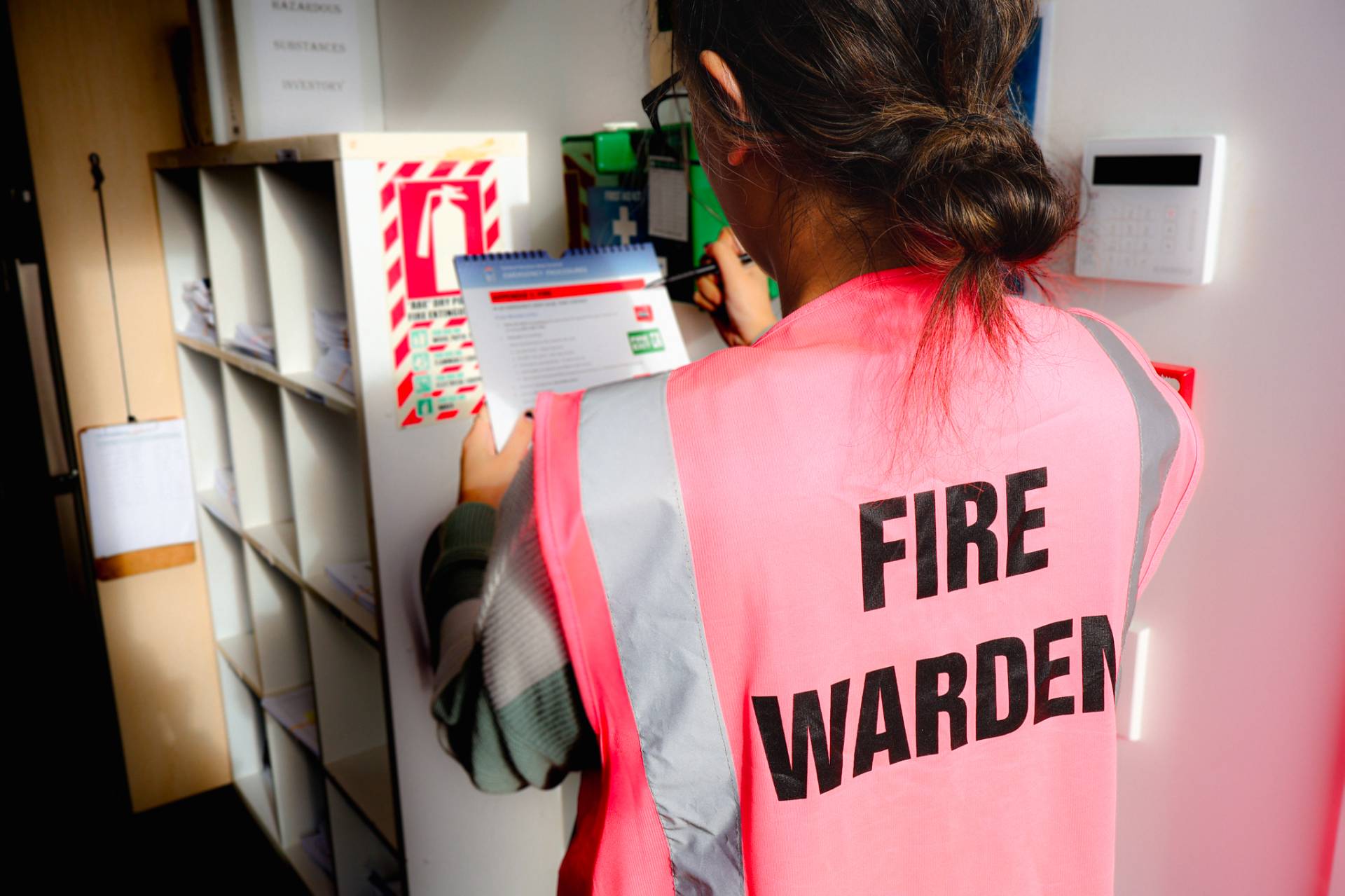
High-visibility vests or hats could really feel decorative up until the hallway full of people looking for direction. The chief warden hat is not a costume. It is the flag people count on. Maintain extra vests and a spare chief warden hat in the control point, since gear goes missing out on right when you need it most.
Evacuation packages must carry floor plans, passenger checklists or accessibility to electronic headcounts, pen pens, a whistle, a flashlight, and basic emergency treatment. Do not overload the kit, or it gets left behind.
Choosing the right chief fire warden course
A useful chief warden course does 3 points: anchors to PUAERF006, fields teachers with real case experience, and builds muscular tissue memory with situation work. Classroom slides are fine for the frameworks, but you need to walk your website, vital your radio, and make phone calls with peers viewing. Ask service providers just how they tailor material to your building class, whether they include PUAERF005 refreshers for the team, and how they evaluate proficiency beyond attendance. A short written test plus a scenario-based assessment defeats a certificate issued for warming up a chair.
Look additionally for providers that resolve your regulatory environment and industry specifics. A storehouse with lithium battery storage needs various emphasis than a shop law office. A healthcare center will certainly concentrate on horizontal evacuations and individual movement. The most effective training names those truths and techniques them.
The human core: tranquility, clarity, and care
People bear in mind the chief fire warden who assisted them out of the building without drama, saw the associate left behind, and talked simply concerning what happened. That online reputation develops teamwork for the next drill and the following genuine occasion. Technical proficiency matters a whole lot, but the heart of the function is take care of individuals directed by consistent judgment.
If you are stepping into the duty, purchase both layers of training. Take the warden course that lines up with PUAERF005 to recognize the ground game, after that finish the PUAERF006 training course to lead with self-confidence. Maintain practicing. Walk the stairs. Check your radio. Look for the small points that go wrong silently, like a dead battery or an obstructed leave. Those details choose whether your following alarm is an afterthought or a failure.
A portable readiness checklist for chief wardens
- Confirm the emergency control organisation lineup, with named replacements for each and every zone. Test radios and extra batteries monthly, and tape the checks. Walk every emptying route quarterly, consisting of alternative stairs and external assembly points. Update flexibility support plans and make certain wardens recognize who needs assistance and just how to offer it. Plan two substantive drills per year, turning situations and consisting of after-hours or special-risk variations.
Final thoughts from the field
I have actually watched normal staff ended up being exceptional chief fire wardens by dealing with the function as a craft. They learned their building's quirks, educated their team to a crisp rhythm, and maintained egos off the beaten track when fire staffs showed up. They knew that a white chief warden hat colour signals leadership, yet genuine leadership is made long prior to the alarm bell rings. With an appropriate chief warden course anchored in PUAERF006, supported by warden training under PUAERF005, and sustained with routine emergency warden training, you can develop that craft right into your workplace. The real test comes without alerting. Prepare to ensure that your decisions feel like force of habit when secs count.
Take your leadership in workplace safety to the next level with the nationally recognised PUAFER006 Chief Warden Training. Designed for Chief and Deputy Fire Wardens, this face-to-face 3-hour course teaches critical skills: coordinating evacuations, leading a warden team, making decisions under pressure, and liaising with emergency services. Course cost is generally AUD $130 per person for public sessions. Held in multiple locations including Brisbane CBD (Queen Street), North Hobart, Adelaide, and more across Queensland such as Gold Coast, Sunshine Coast, Toowoomba, Cairns, Ipswich, Logan, Chermside, etc.
If you’ve been appointed as a Chief or Deputy Fire Warden at your workplace, the PUAFER006 – Chief Warden Training is designed to give you the confidence and skills to take charge when it matters most. This nationally accredited course goes beyond the basics of emergency response, teaching you how to coordinate evacuations, lead and direct your warden team, make quick decisions under pressure, and effectively communicate with emergency services. Delivered face-to-face in just 3 hours, the training is practical, engaging, and focused on real-world workplace scenarios. You’ll walk away knowing exactly what to do when an emergency unfolds—and you’ll receive your certificate the same day you complete the course. With training available across Australia—including Brisbane CBD (Queen Street), North Hobart, Adelaide, Gold Coast, Sunshine Coast, Toowoomba, Cairns, Ipswich, Logan, Chermside and more—it’s easy to find a location near you. At just $130 per person, this course is an affordable way to make sure your workplace is compliant with safety requirements while also giving you peace of mind that you can step up and lead when it counts.